
How to Live in Tokyo: A Complete Guide for Foreigners in 2026

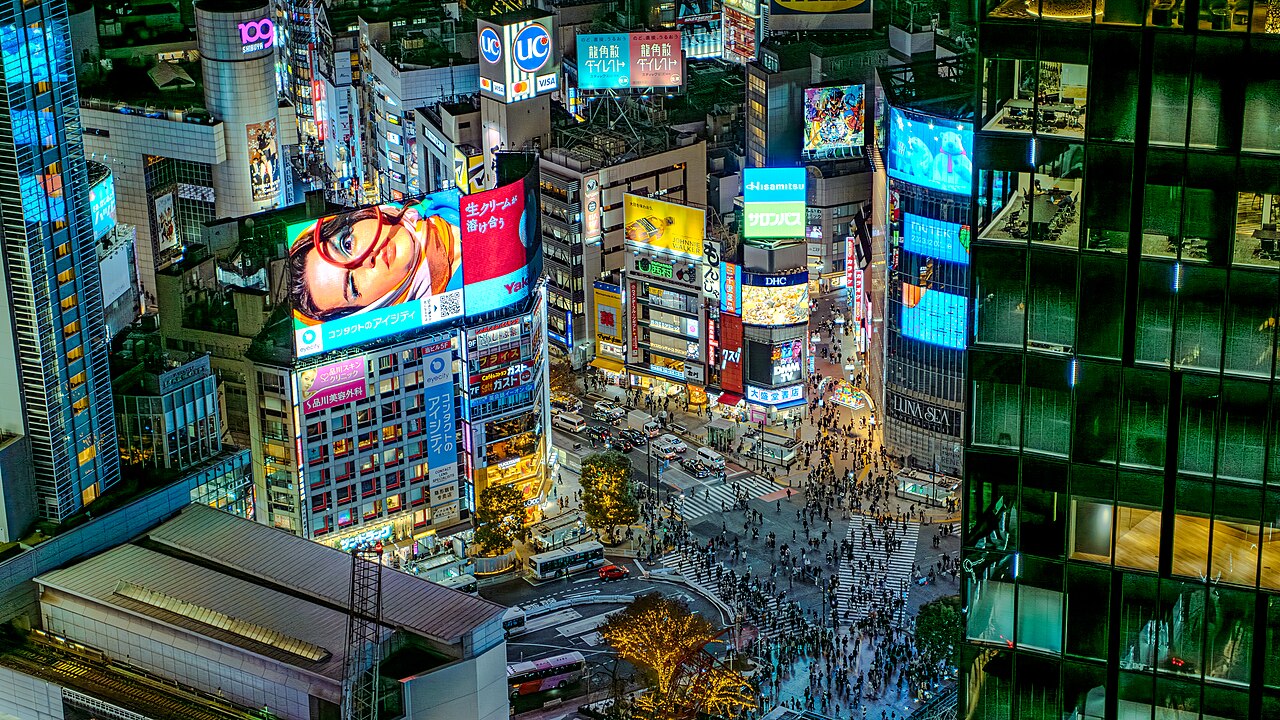
Photo by Adam Ling on Unsplash
Dreaming of making Japan your home? Thousands of foreigners move to live in Tokyo every year, drawn by the city's technology, culture, food, and safety. Whether you're a digital nomad, an English teacher, a software engineer, or a student, this guide covers how to live in Japan, from visas and jobs to housing and the best affordable neighborhoods.
A real foreigner's monthly cost-of-living breakdown for Tokyo, worth watching before you commit to the move.
Visa options to live in Japan as a foreigner
The first step to living in Tokyo is securing the right visa. Japan has expanded its visa options considerably in recent years, making it easier for foreigners to live and work in the country.
Engineer / Specialist in Humanities / International Services visa
This is the most common work visa for foreigners in Japan. It covers three broad categories:
- Engineer track: IT engineers, software developers, data scientists, system administrators
- Specialist in Humanities: Finance, accounting, marketing, consulting, legal services, HR
- International Services: Translation, interpretation, language teaching at private schools, international trade
Requirements include a bachelor's degree (or 10+ years of experience), a job offer from a Japanese employer, and salary equal to or greater than what a Japanese national would earn. Stay periods range from 1 to 5 years.
Highly Skilled Professional (HSP) visa: fast track to permanent residency
Japan's points-based HSP visa is one of the best options for qualified professionals looking to live in Japan long-term. Points are awarded for education, work experience, annual income, age, and Japanese language ability.
- 70+ points: Permanent residency eligible after 3 years
- 80+ points: Permanent residency eligible after just 1 year
Benefits include permission for multiple work activities, spousal work rights, and the ability to bring parents to Japan under certain conditions.
Digital Nomad visa (launched 2024)
Japan's Digital Nomad visa lets remote workers live in Tokyo for up to 6 months. Key requirements:
- Annual income of at least ¥10 million (~$67,000 USD) from clients/employers outside Japan
- Private health insurance with ¥10 million minimum coverage
- Citizenship from a country with a tax treaty with Japan
- No Japanese income tax on foreign-sourced income
It suits high-earning remote workers who want to experience Tokyo without committing to a permanent move.
J-Skip and J-Find programs
J-Skip targets top-tier professionals who can bypass the HSP points system entirely. Research/Technical track requires a master's degree plus ¥20 million annual income (~$133,000). Business Management track requires 5+ years experience plus ¥40 million income (~$267,000). Both grant a 5-year stay with permanent residency after 1 year.
J-Find is aimed at graduates of top-ranked world universities (QS, THE, or Shanghai rankings), allowing up to 2 years in Japan for job hunting or startup preparation.
Student visa
The Student visa allows enrollment at Japanese universities, vocational schools, and language schools. You'll need acceptance from a recognized institution and proof of approximately ¥1.5-2 million (~$10,000-$13,000) in savings. Students can work up to 28 hours per week during school terms and 40 hours during holidays.
Specified Skilled Worker (SSW) visa
Created to address Japan's labor shortage, the SSW visa now covers 19 industries including nursing care, construction, hospitality, agriculture, food service, and, new in 2025, logistics, linen supply, and recycling. Type 1 allows up to 5 years; Type 2 offers unlimited renewals with a path to permanent residency.
Recent policy changes
- Business Manager visa tightened (October 2025): Investment requirement increased from ¥5 million to ¥30 million
- Startup Visa: Available in Tokyo's Strategic Special Zone for entrepreneurs (6-12 months to establish a business)
- Stricter enforcement: Higher penalties for companies not reporting foreign hires
Job opportunities for foreigners in Tokyo
Tokyo's job market for foreigners is the strongest it has been in decades. If you want to live in Tokyo and work, here are the most accessible industries.
English teaching
English teaching remains the most accessible entry point for foreigners, requiring minimal Japanese language ability.
| Role | Monthly Salary | Notes |
|---|---|---|
| JET Programme (ALT) | ~¥337,000 (~$2,250) | Government program, competitive, up to 5 years |
| Dispatch ALT | ¥200,000-270,000 | Private companies (Interac, ALTIA) |
| Eikaiwa (Private Schools) | ¥250,000-275,000 | ECC, Aeon, NOVA, Berlitz |
| University Instructor | ¥300,000-600,000 | Requires master's degree minimum |
IT and software engineering (highest demand)
Japan faces a projected shortage of 790,000 IT workers by 2030, making tech the most in-demand sector for foreigners who want to live in Japan.
- Entry-level: ¥3-5 million/year ($20,000-$33,000)
- Mid-level (3-5 years): ¥5.5-8.5 million/year ($37,000-$57,000)
- Senior (5-10 years): ¥8.5-12 million/year ($57,000-$80,000)
- At global companies: ¥9.5-15 million+/year ($63,000-$100,000+)
In-demand skills include cloud (AWS/GCP/Azure), full-stack development, AI/ML, cybersecurity, and DevOps. Major employers hiring foreign engineers include Google Japan, Amazon Japan, Rakuten (which uses English as its corporate language), Mercari, and LINE.
Finance and banking
Tokyo is a major Asian financial hub. Bilingual professionals can earn ¥6-12 million/year at mid to senior levels. Global banks like Goldman Sachs, Morgan Stanley, and JP Morgan all have Tokyo offices with English-speaking roles in compliance, risk management, and quantitative analysis.
Tourism and hospitality
Japan had a record 36.9 million visitors in 2024. Multilingual staff are in high demand at hotels, tour companies, and restaurants. Entry-level salaries range from ¥200,000-280,000/month, with management roles reaching ¥500,000+/month.
Housing prices in Tokyo: what to expect
Know Tokyo's rental market before you live in Tokyo. Here's what apartments cost in 2026.
Central Tokyo (premium)
- Minato-ku (Roppongi, Azabu): Studio ¥135,000-160,000/mo (~$900-$1,070) | 1LDK ¥228,000-300,000
- Shibuya-ku: Studio ¥100,000-140,000/mo | 1LDK ¥180,000-280,000
- Shinjuku-ku: Studio ¥71,000-100,000/mo | 1LDK ¥143,000-200,000
Upfront costs (budget for 4-6 months' rent)
Renting in Japan involves significant upfront costs that surprise many foreigners:
- Shikikin (Deposit): 1-2 months' rent (partially refundable)
- Reikin (Key Money): 0-2 months' rent (non-refundable gift to landlord)
- Agent's Fee: 1 month's rent
- Guarantor Company Fee: 50-100% of 1 month's rent
- Fire Insurance: ¥15,000-20,000/year
For a ¥100,000/month apartment, expect to pay ¥400,000-600,000 ($2,700-$4,000) upfront before moving in.
Tip for foreigners: UR public housing apartments require no key money, no agent fee, and no guarantor, which makes them the easiest option for foreigners to rent. Share houses (Oakhouse, Social Apartment) also have minimal upfront costs.
Best affordable areas to live in Tokyo
You don't need to spend a fortune to live in Tokyo. These wards are all within the 23 special wards, with full access to Tokyo's train network and 20-40 minute commutes to central areas.
Katsushika-ku: the cheapest ward
Studio: ¥55,000-75,000/mo (~$370-$500)
Located in the far northeast, Katsushika has the lowest rents in all of Tokyo. It is home to the traditional neighborhood of Shibamata and several parks including Mizumoto Park. Good access via the Keisei Line and JR Joban Line. Commute to Shinjuku: 35-50 minutes.
Adachi-ku: revitalized and well connected
Studio: ¥60,000-80,000/mo (~$400-$530)
Once considered rough, Adachi has been transformed by major redevelopment around Kita-Senju station, which now has plenty of restaurants and shopping. Kita-Senju is a major transit hub with 5 train lines, putting Otemachi just 18 minutes and Ueno just 10 minutes away.
Edogawa-ku: family-friendly and international
Studio: ¥60,000-80,000/mo (~$400-$530)
On Tokyo's eastern edge, Edogawa has a large international community (especially around Nishi-Kasai), excellent international food stores, and Kasai Rinkai Park with beach views of Tokyo Bay. Nishi-Kasai to Nihonbashi: 20 minutes on the Tozai Line.
Nerima-ku: green and quiet
Studio: ¥65,000-85,000/mo (~$430-$570)
One of Tokyo's greenest wards with many parks (Shakujii Park, Hikarigaoka Park). Home to several anime studios including Toei Animation. Excellent access: Nerima to Ikebukuro in 6 minutes, to Shinjuku in 20 minutes.
Itabashi-ku: underrated value
Studio: ¥65,000-85,000/mo (~$430-$570)
Great access via the JR Saikyo Line (direct to Shinjuku, Shibuya, and Ikebukuro). The area around Oyama station has a famous covered shopping street. Itabashi to Ikebukuro: 5 minutes, to Shinjuku: 15 minutes.
Beyond the 23 wards: maximum savings
For the absolute lowest cost of living in the greater Tokyo area:
- Hachioji: Studio from ¥40,000-60,000/mo. University town, 40-60 min to Shinjuku
- Machida: Studio from ¥45,000-65,000/mo. Major commercial center, 35-45 min to Shinjuku
- Tachikawa: Studio from ¥50,000-70,000/mo. Developed area, 25-40 min to Shinjuku
Quick comparison: Tokyo rent by area
| Area | Studio (1K) | 1LDK | Character |
|---|---|---|---|
| Minato-ku | ¥135,000-160,000 | ¥228,000-300,000 | Most expensive, upscale |
| Shibuya-ku | ¥100,000-140,000 | ¥180,000-280,000 | Trendy, central |
| Shinjuku-ku | ¥71,000-100,000 | ¥143,000-200,000 | Major hub, nightlife |
| Katsushika-ku | ¥55,000-75,000 | ¥90,000-130,000 | Cheapest ward |
| Adachi-ku | ¥60,000-80,000 | ¥100,000-150,000 | Revitalized, great transit |
| Edogawa-ku | ¥60,000-80,000 | ¥95,000-140,000 | International, family-friendly |
| Nerima-ku | ¥65,000-85,000 | ¥100,000-150,000 | Green, quiet |
| Hachioji | ¥40,000-60,000 | ¥70,000-110,000 | Cheapest, longer commute |
Final tips for moving to Tokyo
- Start visa research early: most visa applications require a Certificate of Eligibility, which takes 1-3 months to process
- Budget for upfront housing costs: have at least 4-6 months' rent saved for deposits and fees
- Learn basic Japanese: even JLPT N5 level makes daily life significantly easier
- Consider share houses first: they're the easiest way to get settled with minimal paperwork and upfront costs
- Get a Japanese phone number: essential for apartment applications, bank accounts, and daily life
- Open a bank account: Japan Post Bank (Yucho Ginko) is the most foreigner-friendly option initially
Tokyo is one of the safest and most efficient cities in the world. With more visa options, a strong job market for foreigners, and some surprisingly affordable neighborhoods, now is a good time to plan the move and live in Tokyo.
More from Class Coupon


Get new verified coupons weekly
One short email a week with newly verified course discounts. No spam, unsubscribe anytime.