
Why I Built Speed Learning: From Tokyo to Taiwan, Six Languages Later
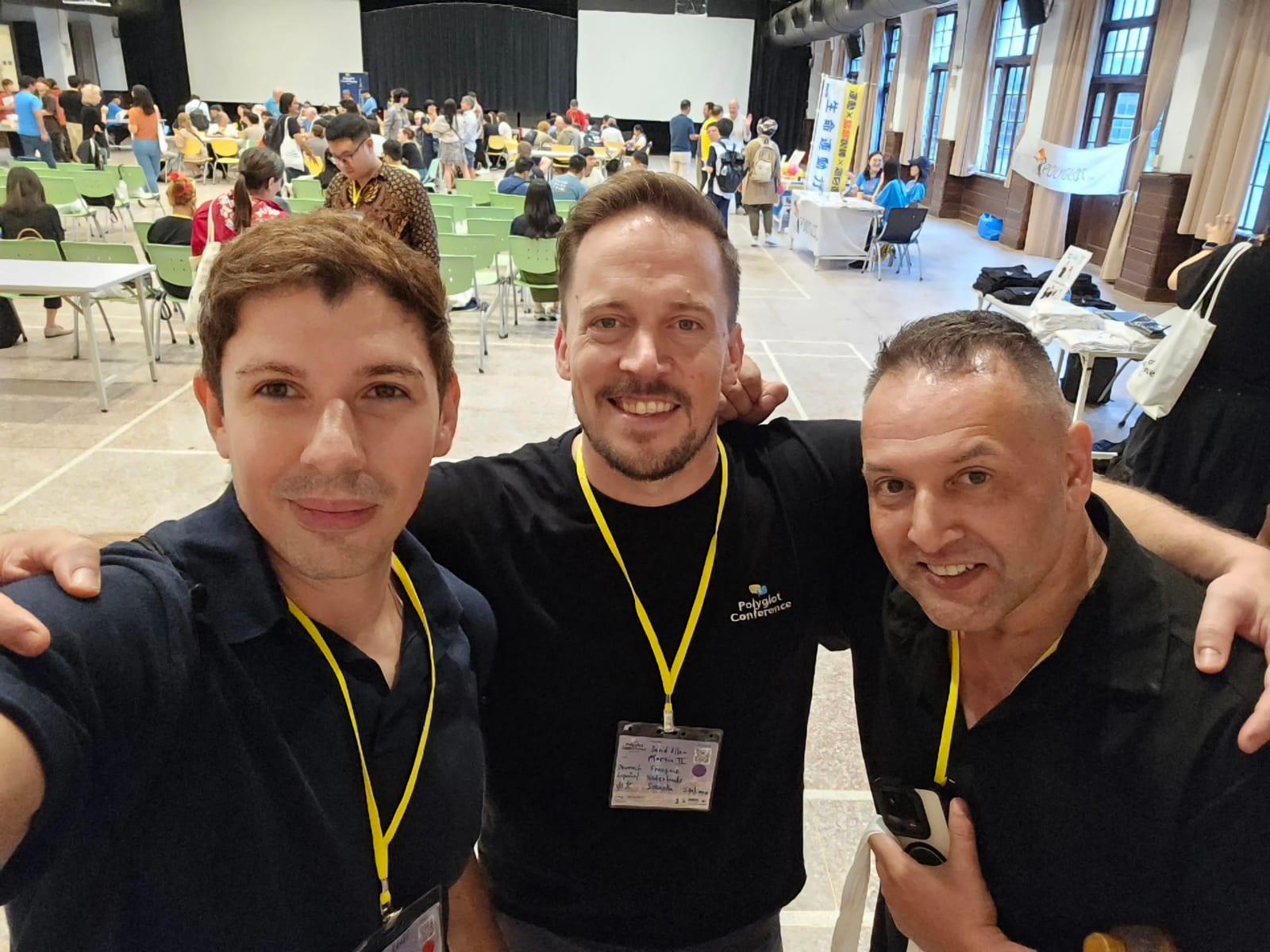
From left: me, David Allen Martin II and Stuart Jay Raj at the Polyglot Conference in Taipei, 2025. I was excited to meet Stuart, my role model in linguistics.
Speed Learning grew out of my own learning experiences as I strived to continually improve myself by obtaining new knowledge. In 2013, I spent a year in Tokyo at J. F. Oberlin University, where I focused on studying for my minor in linguistics, although I was still a computer science major with a technical mindset. That's when I first started to understand how much skill and practice obtaining a new language takes, and how to actually get your brain to absorb a language naturally.
A lot of the people I met at Oberlin were remarkably good at languages, and many of them spoke as many as four or five languages conversationally. I still remember a young woman from Mongolia who could switch between English, Mongolian, Mandarin and Japanese almost effortlessly. She may have been the first person who made me want to become multilingual. I'll admit that all the talented people I met stirred up the competitive nature in me, but in a good way. I remember wondering how much I could push my own brain to remember.
I became fluent in Japanese, learning mostly by trial and error, and over time I noticed that the words that stuck best were words I'd learned in casual situations, such as at bars and social events. I kept going after Japan. I've since lived in Thailand, Malaysia and, briefly, Korea, and I now live in Taiwan. Along the way I've learned Japanese, Thai, Malay, Mandarin, Cantonese and Korean. Mandarin is the one I use every day.
Like anyone in a hurry, I wanted information in my head faster, so I started researching speed learning and bringing my computer science background together with my love of linguistics. In Taiwan I work full time as a lead developer and systems administrator at a large company, and it's here, alongside that job, that I started Speed Learning. I wanted to find out how quickly the brain can absorb information, and to build a mobile app that speeds the process up through sensory memorization, engaging as many senses as it can: touch, sound, color and light. It also brings words back after a delay, because revisiting something again and again, with time in between, helps it stay with you longer.
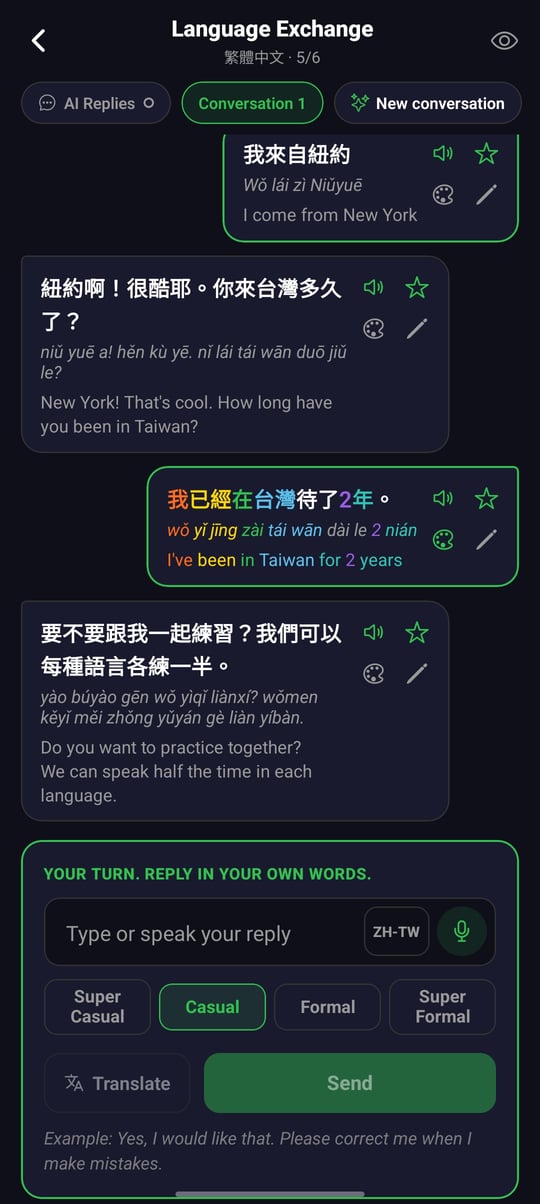
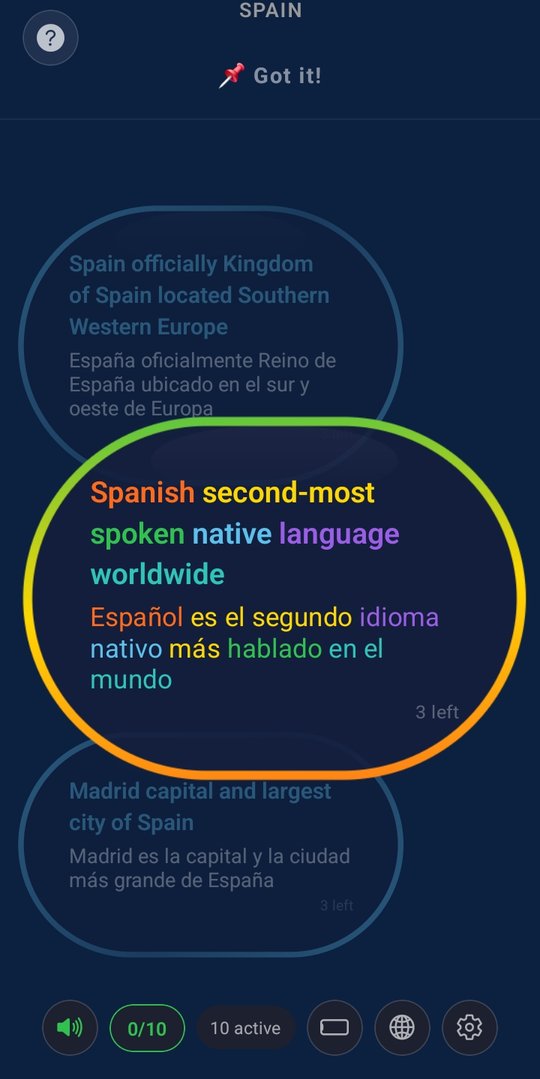
Finally, I'd like to introduce Speed Learning's Translate feature, perhaps the most intuitive and interactive free translation tool available. It lets users change the formality of their sentences, color-match words between languages, save translations into their own categories, and turn those translations into study documents with quick learning activities. Speed Learning is also the only app with clear, precise translations for languages with fewer resources, such as Taiwanese and Shanghainese, and we encourage users to request support for other languages through the app.
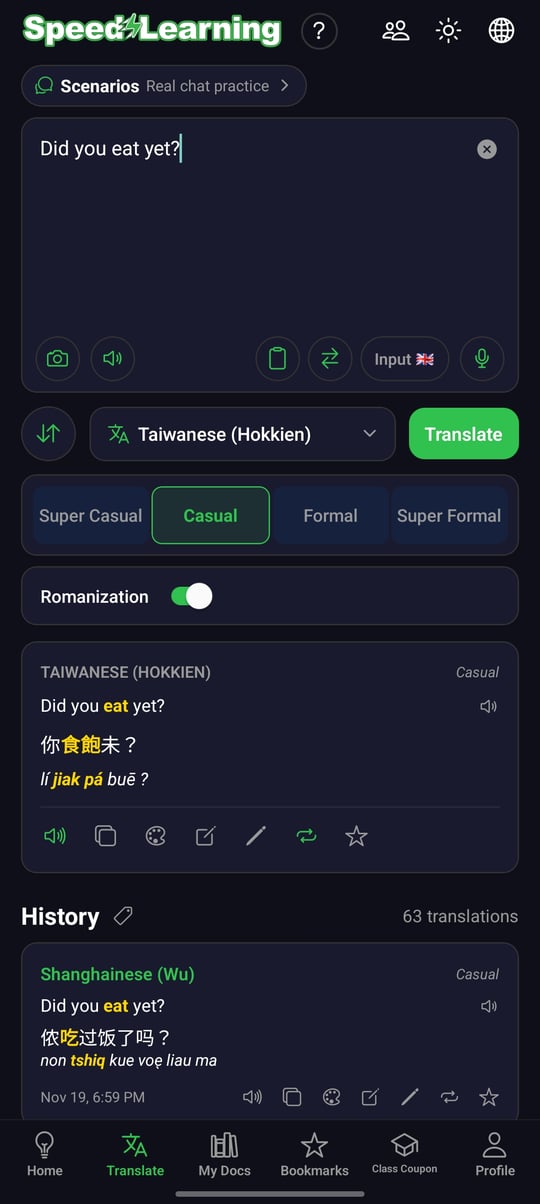
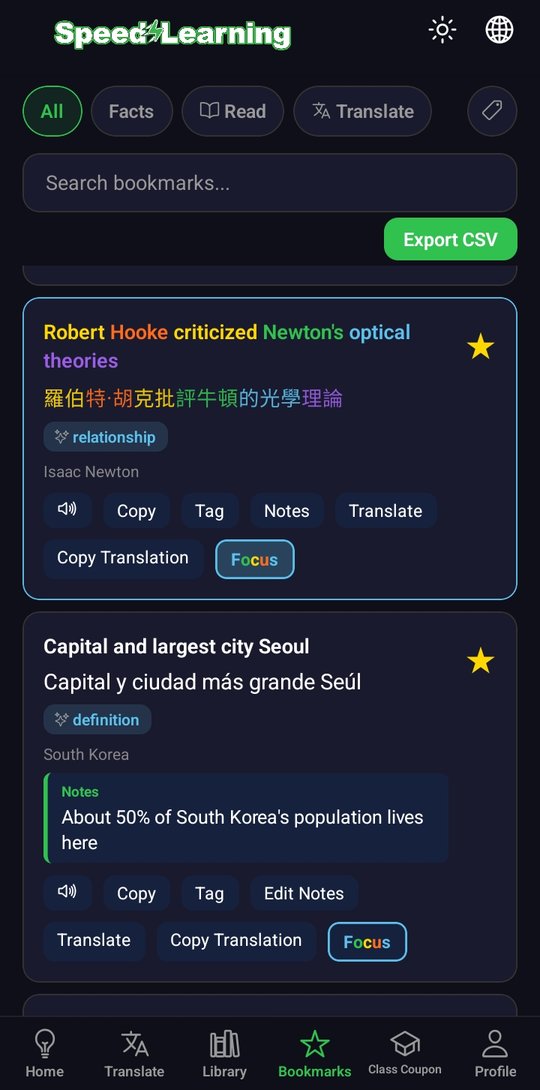
Try Speed Learning and tell us which language you'd like it to support next.
More from Class Coupon


Get new verified coupons weekly
One short email a week with newly verified course discounts. No spam, unsubscribe anytime.