
How to Get a Harvard or MIT Education Online for Under $1,500

You don't need $60,000 to learn from Harvard and MIT
The same universities that teach in Harvard Yard and MIT's Infinite Corridor put courses online that you can take from your kitchen table, often for hundreds of dollars rather than hundreds of thousands.
A traditional Harvard degree costs roughly $55,000 per year, and MIT costs about the same. Through edX, the online learning platform Harvard and MIT co-founded in 2012, you can earn legitimate credentials, including professional certificates and even full online degrees from partner universities, for far less. MIT also publishes the materials for many of its courses free on MIT OpenCourseWare.
These are real courses designed by real faculty, and the edX ones come with assessments and verified certificates that carry the university's name. They've changed how millions of people around the world get access to elite education.
As UNESCO has emphasized, expanding access to quality education is one of the most important challenges of our time, and platforms like edX are doing that at a scale that was hard to imagine a decade ago.
Here's how it works and how to get the most for your money.
How edX credentials work
edX offers several kinds of credentials, and the right one depends on your goals and budget.
MicroMasters Programs
These are graduate-level course sequences that give you in-depth expertise in a specific field. They usually cost between $600 and $1,500 for the full program, and many count as credit toward a full master's degree if you decide to continue, so you get a head start on a master's for a fraction of the cost.
XSeries Programs
An XSeries is a curated sequence of courses on one subject. They're usually shorter and cheaper than MicroMasters programs, often $200 to $500 for the full series. They don't count toward a degree, but they show employers focused expertise.
Professional Certificates
These career-focused programs teach practical, job-ready skills. They cost from a few hundred dollars to about $1,000 and are designed to help you change careers or move up in your current one.
MicroBachelors Programs
These are the undergraduate equivalent of MicroMasters. They cover foundational material and can often be applied as credit toward a bachelor's degree, which makes them useful for exploring a field before committing to a full degree.
Full Online Degrees
edX also offers complete master's degrees from top universities, and these are much cheaper than on-campus programs. We cover one from UT Austin below.
What Harvard offers on edX
Harvard was one of the original partners behind edX, and its catalog there is impressive. Here are some standout programs.
World Religions Through Their Scriptures (XSeries)
One of Harvard's most popular edX offerings, this XSeries explores Christianity, Islam, Hinduism, Buddhism and Judaism through their sacred texts. It's taught by Professor Diane Moore of Harvard Divinity School, and the full XSeries costs a fraction of a single Harvard course on campus. Check the current pricing and available discounts here.
Harvard takes educational research seriously. Its Graduate School of Education has published important work on how learning experiences shape cognitive development.
CS50: Introduction to Computer Science
CS50 may be the most famous computer science course in the world. Professor David Malan's lectures are widely loved, the course is free to audit on edX, and the verified certificate is affordable. It has launched a great many tech careers.
The professor behind CS50: David J. Malan
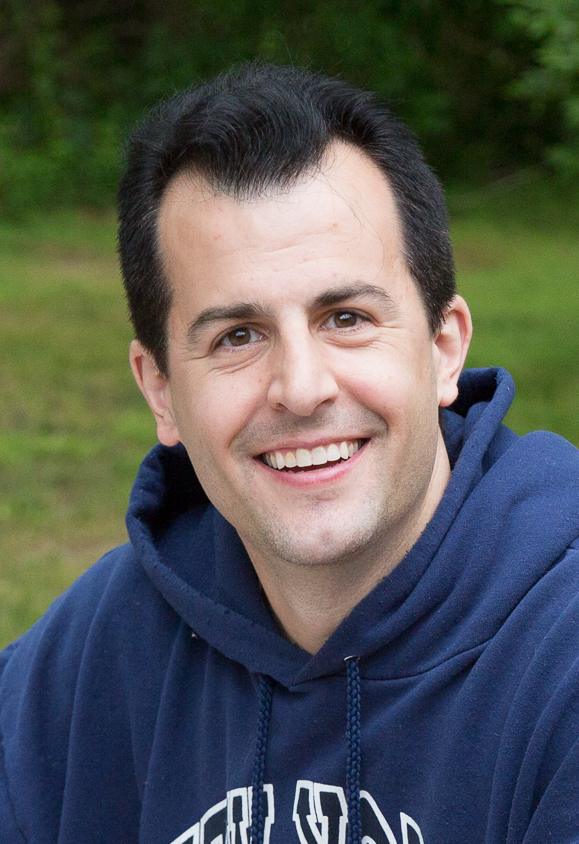
David J. Malan is the Harvard computer scientist who teaches CS50, Harvard's Introduction to Computer Science, and the reason it became the university's most popular class and one of the most-watched courses online. For anyone after a Harvard-level education on a budget, the key point is that the whole course is free: you can audit every lecture, problem set and lab on edX, and the full lectures are on CS50's official YouTube channel. The Harvard classroom Malan teaches each year is open to anyone with an internet connection, with a verified certificate as an affordable add-on if you want the credential.
Watch a full CS50 lecture free
CS50 Lecture 0, from Harvard's official CS50 channel.
Data science and public health
Harvard also offers professional certificates in Data Science (using R) and Public Health, both fields with strong job demand. The Data Science certificate teaches R programming, statistical inference, machine learning and data visualization across nine courses. The Public Health certificate covers epidemiology, biostatistics and health policy.
What MIT offers online
MIT's MicroMasters programs are no longer listed on edX, and edX's MITx school page now redirects to a general partners page. You can still study MIT material for free on MIT OpenCourseWare, which publishes lecture notes, problem sets and exams from MIT courses.
MIT's research also extends well beyond engineering; its cognitive scientists study how people learn.
Introduction to Computer Science and Programming in Python
MIT's introductory programming course is on OpenCourseWare as Introduction to Computer Science and Programming in Python. It's free, with no certificate, and it pairs well with Harvard's CS50.
Statistics for Applications
For a rigorous statistical foundation, MIT's Statistics for Applications is also free on OpenCourseWare.
Beyond Harvard and MIT
Harvard and MIT get the headlines, but some of the best value on edX comes from other top universities.
UT Austin: Master of Science in Artificial Intelligence (about $10,000)
This is a full, accredited master's degree from the University of Texas at Austin, one of the top computer science programs in the country, for around $10,000. A typical on-campus MS in AI can easily cost $40,000 to $80,000. You get the same UT Austin degree and faculty, and a credential that carries real weight in the tech industry. Learn more about the UT Austin MS in AI program.
Harvard: Web Programming Professional Certificate
If you're just starting out in tech, Harvard's Web Programming certificate on edX builds on CS50 and teaches web development in Python and JavaScript. Check the Harvard Web Programming certificate.
IBM: Data Science Professional Certificate
IBM's Data Science Professional Certificate on edX covers Python, SQL, machine learning and data visualization and ends with a capstone project. See the IBM Data Science certificate deal.
RIT: Cybersecurity and Project Management MicroMasters
Rochester Institute of Technology offers two practical MicroMasters programs. Its Cybersecurity MicroMasters covers network security, digital forensics and risk management, and its Project Management MicroMasters teaches the frameworks organizations use to deliver complex projects on time and on budget.
KU Leuven: European Studies
If you lean toward the humanities and social sciences, KU Leuven, one of Europe's oldest universities, offers a certificate in European Studies covering history, culture and society.
How to save more
These programs are already cheap compared with traditional education, and you can save more with the right approach.
Use coupon codes
One code we've listed for edX:
- PERKSPOT20: 20% off select courses. Check whether your program qualifies, because 20% off a MicroMasters can save you $150 to $300.
We track the latest edX discounts and coupon codes on our coupons page, so check there before you enroll.
Use the bundle discount
When you buy a full program instead of individual courses, edX typically takes 10% off. That discount sometimes stacks with promotional codes, so you might combine a 10% bundle discount with a 15-20% coupon code; on a $1,200 MicroMasters, that could save you $250 or more.
Apply for financial assistance
edX offers financial assistance that can cut the cost of verified certificates by up to 90%. You fill out an application explaining your financial situation, and a response typically takes about two weeks. If you can't afford the full price, it's a legitimate way to earn credentials from Harvard and other top universities for very little.
Audit first, then decide
Most edX courses let you audit the content for free. You won't get a certificate or graded assignments, but you can watch all the lectures and use most of the materials, which lets you test a course before spending anything.
Is it worth it?
An edX MicroMasters isn't the same as a full degree from the university that offers it, and nobody claims it is. It is verified proof that you completed graduate-level coursework from a strong institution, assessed by its faculty.
Employers are paying attention. Learners who complete MicroMasters programs report an average salary increase of 17%, and companies like Google, IBM, Amazon and McKinsey have acknowledged the value of online credentials from top universities.
There's also a route to a degree. If you complete a MicroMasters and then want the full master's, the courses often count as credit, so you've already shown you can handle the work and saved thousands on the first part of the degree.
Getting started, step by step
Step 1: Define your goal
Are you trying to switch careers, get a promotion or explore a new field? Your answer decides which type of credential makes the most sense.
Step 2: Browse and compare programs
Don't pick the first program you see. Compare the curriculum, number of courses, time commitment and total cost, and read reviews from other learners.
Step 3: Audit a course first
Audit the first course in your chosen program for free and give it at least two weeks of real effort.
Step 4: Apply discounts before enrolling
Before you click "enroll," check for active coupon codes such as PERKSPOT20 (20% off select courses), look into the program bundle discount, and apply for financial assistance if cost is a barrier.
Step 5: Set a schedule and stick to it
Block specific times in your calendar for coursework and treat them like a class you have to attend. Completion rates for online courses are notoriously low, but people who keep a regular schedule finish at much higher rates.
Step 6: Build as you learn
Don't just complete assignments and forget them; build a portfolio. If you're studying data science, publish your projects on GitHub. If you're studying finance, write analysis posts on LinkedIn.
The bottom line
Ten years ago, a Harvard or MIT education meant six-figure tuition, moving your life and competing for a handful of places. Now much of it takes an internet connection and, for a credential, a few hundred dollars.
The Harvard World Religions XSeries, Harvard's CS50 and the UT Austin MS in AI are real programs with real rigor from real institutions, and MIT OpenCourseWare is free.
Browse all our current edX deals and coupon codes to find the right program at the right price.
More from Class Coupon


Get new verified coupons weekly
One short email a week with newly verified course discounts. No spam, unsubscribe anytime.