
How Asia Became an Education Superpower: Rankings and Reality
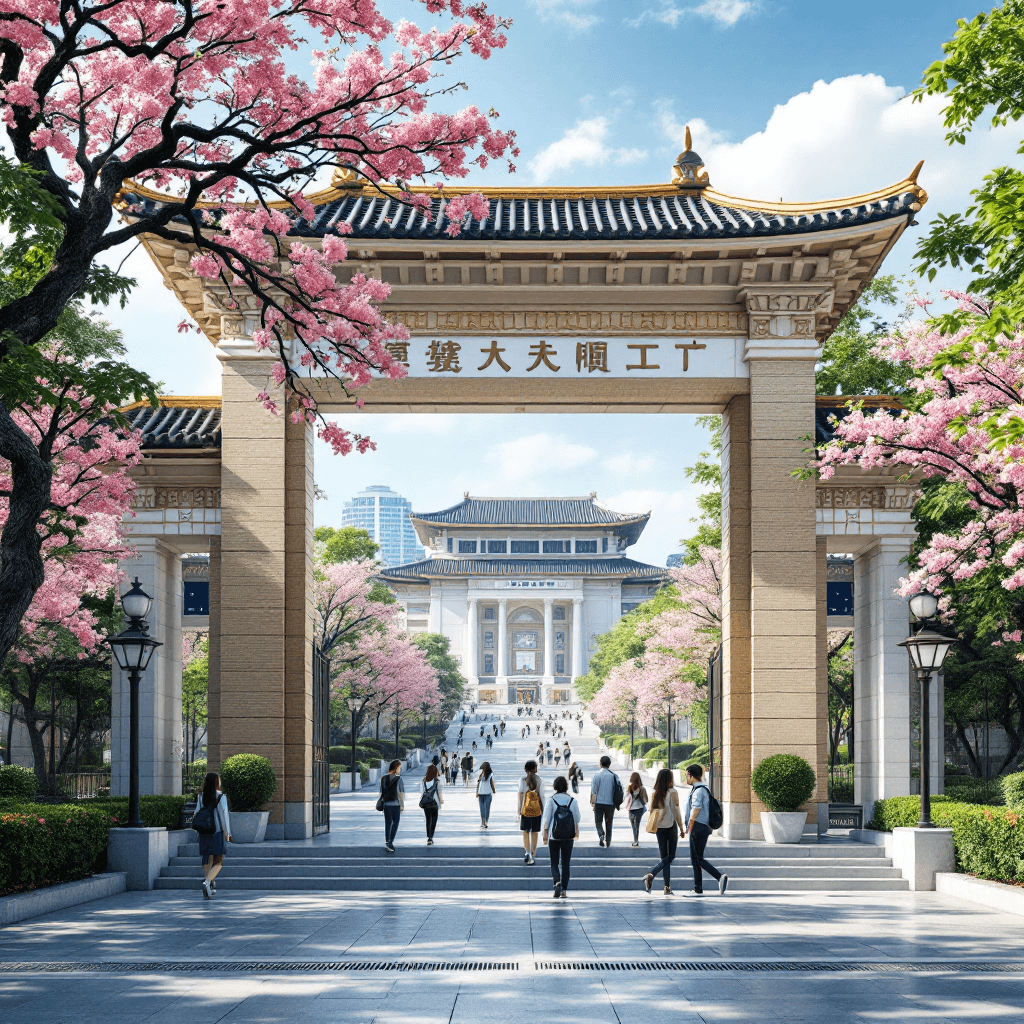
In 2009, Shanghai entered the PISA assessment for the first time and topped every category: math, science, and reading. The global education establishment was shaken. A city in a developing country had outperformed the entire Western world.
Reactions ranged from admiration to disbelief to suspicion, but the result held, and it was not a one-time fluke. In every PISA cycle since, Asian education systems have dominated the top rankings. Few now doubt that Asia is an education superpower, so the more useful question is how it got there.
What the rankings show, and what they don't
The PISA assessment, administered by the OECD every three years, tests 15-year-olds in mathematics, science, and reading. It's the most widely cited international education comparison, and the results consistently tell the same story:
Math: Singapore, South Korea, Japan, Taiwan, and Chinese provinces routinely take the top 5-7 spots. The gap between these countries and the OECD average is huge, equivalent to roughly 2-3 years of schooling.
Science: Similar pattern. Singapore and Japan lead, with South Korea, Taiwan, and Vietnam close behind. Vietnam's performance is particularly notable given its per-capita GDP is a fraction of the other top performers.
Reading: Singapore leads, with South Korea and Japan in the top tier. China's performance in reading is weaker than in math, possibly because the Chinese writing system requires memorizing thousands of characters.
The TIMSS assessment (Trends in International Mathematics and Science Study), which tests 4th and 8th graders, shows a similar picture. Singapore, South Korea, Japan, Taiwan, and Hong Kong consistently lead.
Rankings leave a lot out, though. PISA measures a specific set of skills at a specific age. It doesn't measure creativity, entrepreneurship, social-emotional development, or physical health. A country can top PISA while having serious problems with student wellbeing, and several Asian countries do.
The ingredients of academic excellence
Cultural foundation
You can't fully explain Asian academic performance without the cultural factors. Confucian values, such as respect for education, belief in effort over innate talent, and family investment in children's learning, create social support for academic achievement that policy alone cannot.
There is nothing mystical or genetic about it. It comes down to behavior. Asian parents spend more time on education-related activities with their children, Asian students spend more hours studying, and Asian communities treat academic achievement as a shared value rather than an individual pursuit. These patterns are measurable, and so are their results.
Teacher quality and status
In South Korea, teaching is among the most respected and competitive professions, with applicants outnumbering positions by 10:1 or more. In Singapore, teachers are recruited from the top third of university graduates and trained at the National Institute of Education, a single, prestigious institution that keeps training consistent.
Japan's lesson study tradition means teaching keeps improving through shared practice. Teachers aren't left alone in their classrooms. They belong to a professional community that shares, evaluates, and refines teaching approaches together.
Compare that with countries where teaching is a fallback career, pay is low, and professional development is an afterthought. The difference in outcomes is predictable.
Curriculum design: depth over breadth
Asian curricula tend to cover fewer topics in more depth. The "Singapore Math" approach, now adopted in over 70 countries, teaches each math concept in a concrete-pictorial-abstract sequence: first with physical objects, then with pictures, then with symbols. Students don't move on until they've mastered it.
Many Western curricula take a "mile wide, inch deep" approach instead, where students meet many topics briefly without understanding any of them well. The Asian approach takes more patience and builds stronger foundations.
Systematic accountability
Asian education systems tend to have clear national standards and regular assessment. The aim is less "teaching to the test" than making sure every student, whatever their school or neighborhood, is measured against the same benchmarks.
In Vietnam, national examinations at key transition points (end of primary, end of secondary) create accountability throughout the system. In Japan, the national curriculum is detailed enough that a student transferring from Hokkaido to Okinawa would find essentially the same content being taught.
The countries to watch
Vietnam: far above its weight
Vietnam's PISA performance is the most remarkable story in global education. With a GDP per capita of roughly $4,000, Vietnamese students outperform those in countries five to ten times wealthier. The reasons include a strong cultural emphasis on education, fairly even distribution of resources, high teacher quality relative to income levels, and a curriculum that emphasizes depth.
India: scale and ambition
India doesn't participate in PISA (it did once, in 2009, and the results were disappointing). But India's elite institutions, the IITs, IIMs, and AIIMS, produce graduates who compete at the highest global levels. The challenge is extending that quality beyond the elite tier to the broader population of 250+ million students.
Indonesia: the emerging giant
Indonesia has the fourth-largest education system in the world (50+ million students) and has made significant gains in enrollment and basic literacy. Its PISA scores remain below the OECD average, but they are rising, and the government's "Merdeka Belajar" (Freedom to Learn) reform is ambitious.
What matters beyond rankings
Rankings are useful benchmarks, but they aren't the goal. An education system should be judged on whether it prepares people for fulfilling, productive lives. By that standard, Asian education systems have real strengths and real weaknesses.
On the plus side, students get strong academic foundations, disciplined work habits, respect for knowledge, and increasingly inventive teaching. On the minus side, there is heavy pressure on students, a narrow idea of success, mental health problems, and in some countries a persistent gap between urban and rural areas.
The most interesting Asian education systems acknowledge both. They are proud of their world-leading test scores and are also working on the human cost of achieving them.
Experience it yourself
Studying in Asia gives you firsthand experience of these high-performing systems. Whether you're studying Korean at Seoul National University, earning a Japanese certificate at Waseda, or learning Mandarin in Bangkok, you'll see the academic culture behind these results up close.
Online options make this easier still. LTL Flexi Classes offer live group lessons with Asian-based teachers, Preply provides 1-on-1 tutoring, and self-paced platforms like KoreanClass101 let you study at your own speed.
For more on specific aspects of Asian education, explore our articles on lessons from top-performing systems and how reform is reshaping the region.
More from Class Coupon



Get new verified coupons weekly
One short email a week with newly verified course discounts. No spam, unsubscribe anytime.